
The Mourinho Effect: Real Madrid’s Cycle of Return and Reinvention
Jose Mourinho's return to Real Madrid is not a surprise but a testament to the club's cyclical approach to leadership, blending established cycles with the promise of reinvention.
Jose Mourinho’s return to Real Madrid, thirteen years after his departure, is a narrative that has captivated the football world. Yet, for those who have followed the club closely, it should come as no surprise. This move signifies not just a managerial appointment, but a continuation of Real Madrid’s ingrained philosophy of cyclical leadership, a pattern of returning to familiar figures to reignite ambition and pursue dominance. This column delves into the multifaceted «Mourinho Effect» on Los Blancos, examining the club’s historical tendencies, the potential impact of this reunion, and the lingering questions surrounding its long-term efficacy.
Why This Return Matters
The decision to bring back Jose Mourinho is more than a nostalgic nod to the past; it’s a strategic maneuver deeply embedded in Real Madrid’s DNA. The club has a well-documented history of revisiting successful eras and managers, fostering a sense of continuity and proven capability. Mourinho’s previous tenure, while tumultuous, was also marked by significant achievements, including a La Liga title and a Copa del Rey. His return suggests a belief that he can once again harness the club’s immense potential and guide them through a new era of success, particularly in the competitive landscape of European football. This move also speaks to the power of established figures in a sport often driven by personality and proven track records.
What the Sources Show
The research packet offers compelling insights into this narrative. MARCA, a prominent Spanish sports daily, has extensively covered Real Madrid’s managerial movements. Their reporting on Mourinho’s potential return, alongside discussions of other managerial candidates and club strategies, highlights the ongoing discourse surrounding leadership at the Santiago Bernabéu. The mention of «The return of Jose Mourinho, the continuation of the Real Madrid cycle» from Football España’s featured analysis directly supports the thesis that this is not an isolated event but part of a pattern. Furthermore, the inclusion of articles discussing Florentino Pérez’s vision and potential signings, as seen on SI.com and Football España, indicates a club actively seeking to blend established cycles with ambitious reinvention. For example, the SI.com article mentioning Florentino Pérez’s intention to form a new generation of stars, while also referencing Mourinho’s potential role, illustrates this dual approach.
| Manager | Key Achievement | Tenure Start | Tenure End | Notable Return? |
|---|---|---|---|---|
| Miguel Muñoz | Multiple La Liga titles, European Cups | 1960 | 1974 | N/A |
| Vicente del Bosque | Champions League, La Liga | 1999 | 2003 | N/A |
| Zinedine Zidane | Multiple Champions League titles | 2016 | 2018 | Yes (2019-2021) |
| Jose Mourinho | La Liga title, Copa del Rey | 2010 | 2013 | Now |
Competing Readings
One interpretation of Mourinho’s return is that it represents a safe, albeit predictable, choice for Real Madrid. The club, under Florentino Pérez, often gravitates towards managers who have a deep understanding of its internal workings and possess the gravitas to command respect from a dressing room filled with global superstars. This perspective suggests that the «Mourinho Effect» is one of immediate impact and clear direction, leveraging his renowned tactical acumen and motivational skills to restore order and drive.
However, a competing reading posits that this is a calculated gamble on rejuvenation. While Mourinho is a familiar figure, his return comes at a different stage of his career and with a potentially evolved tactical approach. Real Madrid might be banking on his experience to navigate the complexities of modern football while simultaneously integrating new talent and adapting to evolving playing styles. The club may be seeking to blend the «old guard» of proven winners with a fresh wave of players, a strategy often seen in their «Galácticos» projects.
What Remains Unclear
Despite the historical precedents and current indicators, several aspects of Mourinho’s return remain uncertain. The specific tactical blueprint he intends to implement with the current squad is a key unknown. Will he revert to his more pragmatic, defensively solid style, or will he adapt to a more possession-based approach favored by many top clubs today? Furthermore, the dynamics between Mourinho and the club’s hierarchy, particularly Florentino Pérez, will be crucial. Their previous relationship was marked by tension, and understanding how this iteration will function is vital. The long-term sustainability of his methods, given his history of intense periods followed by eventual departures, also presents a significant question mark.
Practical Checks for Readers
For followers of Spanish football, several practical checks can help gauge the success of this managerial cycle. Firstly, monitor Real Madrid’s defensive solidity and efficiency in converting chances. Mourinho’s teams are typically characterized by strong defensive organization. Secondly, observe the team’s adaptability and performance in high-pressure matches, particularly in the Champions League. A manager like Mourinho often thrives in these environments. Lastly, pay attention to the development and integration of younger players. While Mourinho is known for his reliance on experienced stars, a successful modern manager must also foster emerging talent. The «Mourinho Effect» will ultimately be measured by tangible results and the club’s sustained presence at the pinnacle of Spanish and European football.
Related news
La acampada de Sol y el problema de la vivienda en España: ¿Qué impacto tiene en el fútbol?
La protesta en Sol por el desahucio de Maricarmen y la crisis de vivienda se cruza con la realidad de los clubes…
Leer nota
Carlos Verona analiza el Mundial de Ciclismo: “Que no esté Pogacar hace que haya más oportunidades”
El ciclista español Carlos Verona pasó por 'Tiempo de Juego' para analizar el Mundial de Ciclismo en Montreal. Destacó la ausencia de…
Leer nota
El virus FIFA vuelve a amenazar al Barça: riesgo de lesiones y fatiga en un parón de selecciones alargado
El parón internacional de septiembre de 2026 llega con un calendario inusualmente largo para la selección española y viajes intercontinentales para jugadores…
Leer nota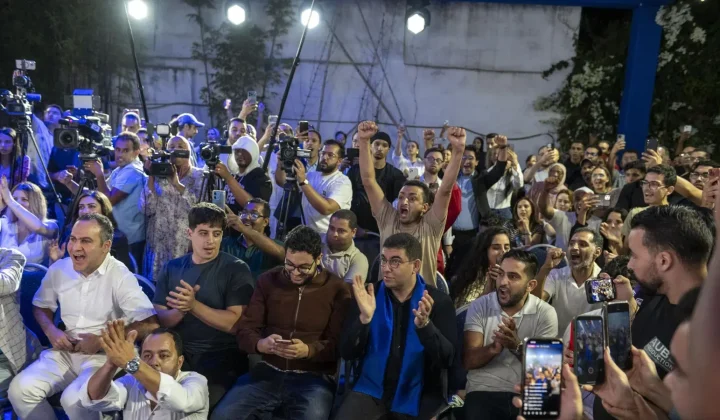
La abstención marca las elecciones en Marruecos mientras el presidente de la Federación de Fútbol se perfila como nuevo jefe de Gobierno
La victoria del Partido de la Autenticidad y la Modernidad, próximo a la Casa Real, asegura la continuidad de la coalición de…
Leer nota