
Roman Shipwreck in Mallorca Yields Unprecedented Inscriptions and Artifacts
Archaeologists are meticulously recovering and preserving the remains of a 4th-century Roman merchant vessel discovered off the coast of Mallorca, revealing a wealth of unique inscriptions and artifacts that shed new light on ancient maritime trade.
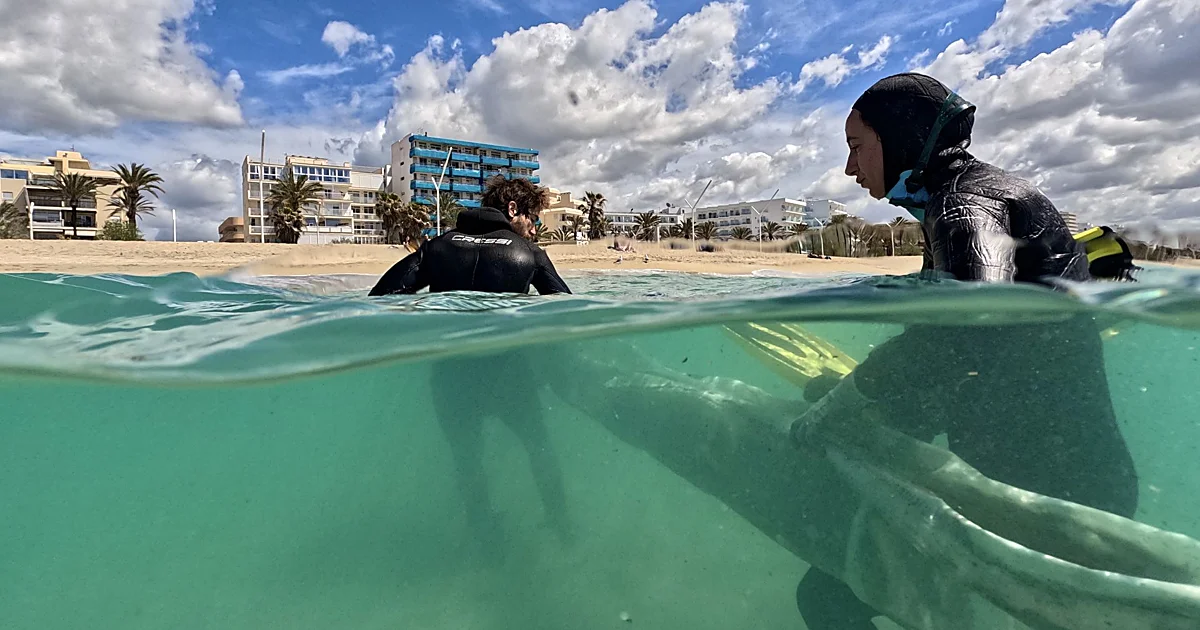
Archaeologists are engaged in a delicate operation to recover and preserve the 4th-century Roman merchant vessel, Ses Fontanelles, discovered submerged just 65 meters off the coast of Can Pastilla, Palma de Mallorca. The project, led by the Arqueomallornauta team, has already yielded an exceptional collection of artifacts and inscriptions, offering unparalleled insights into Roman maritime trade and life.
Recovering the Vessel
The shipwreck, estimated to be around 12 meters long and 5 meters wide, was initially discovered in 2019. It had been carrying approximately 320 amphorae filled with fermented fish sauces, oil, and wine. A significant portion of these amphorae still contained their original contents, sealed stoppers, and, remarkably, a large number of painted inscriptions, known as ‘tituli picti’.
These inscriptions have proven to be of immense historical value. Project co-director Darío Bernal-Casasola, a professor of Archaeology at the University of Cádiz, highlights that Ses Fontanelles is the Roman shipwreck with the most painted inscriptions found in the entire Mediterranean. The study of these markings has already allowed researchers to identify the names of potential ‘mercatores’ (commercial agents) named Alumnio and Ausonio, and to ascertain that seven scribes were involved in labeling the vessels. Furthermore, the term ‘rationis,’ appearing on some of the pottery, suggests a connection to fiscal systems and taxes, a conclusion previously unreached in maritime archaeology.
Challenges and Discoveries
The vessel sank in the Bay of Palma, likely due to a temporal event that also uncovered its remains years later. Aware that similar weather could destroy the fragile structure, the archaeological team faced the challenge of how to extract the ship. Initial plans to refloat it whole were abandoned when further excavations revealed that the keel had shifted, making such an operation too risky. The consensus among Spanish and international specialists was to extract the ship in the smallest possible number of sections.
Since March, the team has been meticulously dismantling the hull and excavating the surrounding area to ensure no artifact is overlooked. So far, 65% of the merchant vessel, comprising 230 wooden pieces of varying sizes, has been recovered and transported to a conservation camp at the Castillo de San Carlos for documentation and initial treatment.
Among the significant finds is the handle of a ‘timón de espadilla,’ a type of tiller rarely found in Spain. Carlos de Juan, an archaeologist from the University of Valencia involved in the project, explains that these parts are usually located high on vessels and are easily lost. The team also discovered an anchor that is expected to provide valuable information about the sinking process and the stratigraphy of the site. Notably, the anchor appears to have broken an amphora that had already fallen to the seabed during the shipwreck. The discovery of a previously unknown type of amphora, designated ‘Ses Fontanelles 1,’ and three intact shoes further underscore the unique importance of this find.
Dating the Shipwreck
In 2022, archaeologists recovered sealed amphora stoppers bearing a chrismon, a Christian symbol, which helped date the cargo to after the Edict of Milan in 313 AD. This dating was further refined by the discovery of a coin in the ‘carlinga’ (the cavity where the mast was seated) two years later. Minted in Siscia (modern-day Croatia) in 320 AD, the coin suggests a possible ritual baptism of the vessel. Researchers are investigating another metallic concretion in the bow carlinga, which could indicate the presence of a second coin. The absence of detected repairs suggests the ship sank a few years after these events, likely between 330 and 350 AD, pending dendrochronological analysis of the wood. The presence of both chrismons and a lamp decorated with the Roman goddess Diana suggests a period of coexistence between paganism and early Christianity.
Future Plans and Conservation
The recovered wooden pieces are being carefully documented and supported on methacrylate stands or fiberglass beds to prevent collapse once out of the water. The team is also using photogrammetry to create a 3D model of the vessel for future study. Conservators are monitoring the delicate wooden materials in treatment pools to prevent the proliferation of microorganisms.
The ultimate goal is for the Ses Fontanelles to be displayed in a new Center for Archaeology planned for Mallorca, which will feature a dedicated space with appropriate conditions for the ship. This center, to be built near the Roman site of Pollentia, will have a strong focus on underwater archaeology, given the Balearic Islands’ rich maritime history. Before public display, the remains will undergo further conservation treatment at the Museo de Arqueología Subacuática (Arqua) in Cartagena, a process expected to take approximately three years.
Datos clave
- Nombre del pecio: Ses Fontanelles
- Época: Mediados del siglo IV d.C. (aprox. 330-350 d.C.)
- Ubicación: Bahía de Palma, Mallorca
- Hallazgos clave: 320 ánforas, inscripciones ‘tituli picti’, mando de timón, moneda del 320 d.C.
- Importancia: Mayor número de inscripciones romanas en un pecio del Mediterráneo
This discovery is significant for Football Español readers as it highlights a crucial aspect of Spain’s rich historical heritage, connecting the country’s ancient past with its present-day maritime identity. The detailed archaeological work and the insights gained into Roman trade routes and cultural practices provide valuable context for understanding the long history of seafaring and commerce in the Iberian Peninsula.
Fuente: https://www.abc.es/cultura/pulso-mar-rescatar-mercante-romano-siglo-mallorca-20260522020038-nt.html
Source
abc.es Original publication: 2026-05-25T06:32:10+00:00
Related news

Pere Romeu critica a la Federación por llevarse a Serrajordi al Mundial Sub-20
El técnico del Barça femenino considera injusta la citación de una jugadora que ya ha debutado con la absoluta. Si España llega…
Leer nota
Las terceras equipaciones del Real Madrid y el Barcelona para 2026-27: rosa y verde retro
El Real Madrid recupera el rosa con Adidas y el Barcelona presenta un diseño verde inspirado en los años 90. Las dos…
Leer nota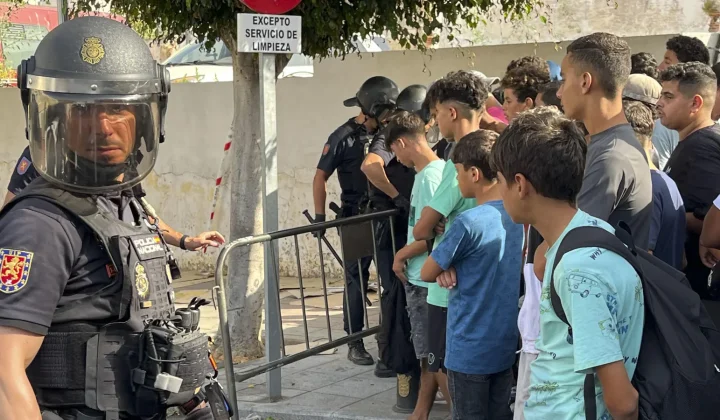
El impacto de la crisis migratoria en Ceuta y su repercusión en el entorno deportivo local
Analizamos cómo la situación de emergencia social y sanitaria que atraviesa Ceuta afecta de manera indirecta a la actividad cotidiana y a…
Leer nota
La apuesta de Corberán sin lateral derecho: tres centrales, carrileros y un plan que funcionó hasta la roja de Gayà
El Valencia CF ensayó ante el Newcastle un plan de emergencia sin lateral derecho: defensa de tres, carrileros zurdos y Pepelu como…
Leer nota