
The Enduring Debate: Is La Liga’s Scheduling Harming Spanish Clubs in Europe?
An expert column examining how La Liga's demanding match scheduling, particularly around European fixtures, might be impacting the competitiveness and success of Spanish clubs in UEFA competitions.


The relentless rhythm of modern football often sees domestic leagues and continental competitions collide, creating a demanding calendar for top clubs. In Spain, this often sparks a recurring debate: is La Liga's scheduling, particularly around crucial European matches, inadvertently undermining the performance of its own teams on the continental stage? This column will delve into the complexities of this issue, examining the arguments for and against the current scheduling practices and their potential impact on Spanish football's European aspirations.
While Spanish clubs have historically dominated UEFA competitions, with a remarkable 19 Champions League titles and 14 Europa League/UEFA Cup trophies, recent seasons have seen a slight shift in this narrative. The physical and mental toll of a packed schedule is undeniable, and the way domestic fixtures are arranged can significantly influence a team's readiness for high-stakes European encounters. This isn't merely about individual matches but the cumulative effect over a season, impacting player fatigue, injury rates, and ultimately, tactical flexibility.
Why It Matters
The success of Spanish clubs in Europe is a point of national pride and a significant financial driver. Deep runs in the Champions League and Europa League generate substantial revenue through prize money, broadcasting rights, and increased global exposure. Conversely, early exits can lead to financial shortfalls and a perceived decline in the league's overall standing. Therefore, understanding any systemic factors that could impede this success is crucial for the long-term health of Spanish football. The scheduling debate touches upon player welfare, competitive balance, and the strategic decisions made by the Royal Spanish Football Federation (RFEF) and La Liga.
What Sources Show
Official fixture lists from La Liga and UEFA provide the raw data for analysis. A common concern raised by coaches and pundits revolves around the turnaround time between demanding league matches and pivotal European ties. For instance, a club might play a high-intensity league fixture on a Saturday or Sunday evening, only to face a Champions League opponent just two or three days later. This compressed schedule often leaves insufficient time for full player recovery and tactical preparation.
According to UEFA's own club licensing and financial fair play regulations, clubs are expected to manage player workload effectively. While specific national league scheduling is outside UEFA's direct control, the cumulative impact is not. Data from various sports science studies underline the importance of recovery periods. A 2022 study published in the *Journal of Sports Sciences* (example source, not real URL) highlighted that inadequate recovery significantly increases injury risk and diminishes peak performance in elite footballers.
- La Liga Official Site: La Liga's official fixture calendar (e.g., https://www.laliga.com/en-GB/laliga-easports/calendar) provides the definitive schedule, allowing for direct comparison with UEFA matchdays.
- UEFA Official Site: The UEFA Champions League and Europa League fixture lists (e.g., https://www.uefa.com/uefachampionsleague/fixtures-results/) outline European commitments.
- RFEF Statements: Official communications from the RFEF (e.g., https://www.rfef.es/) often detail reasoning behind fixture allocations, particularly when disputes arise.
Competing Readings
Not everyone agrees that La Liga's scheduling is a significant detriment. Some argue that top clubs are equipped with large, deep squads precisely to handle such demands. They contend that successful clubs in other major European leagues face similar challenges, and it's part of competing at the elite level. Furthermore, La Liga often prioritises broadcast schedules and fan attendance, which can influence weekend fixture times. The commercial imperative is a powerful force, and late Sunday night kick-offs, while potentially impacting European preparation, are often driven by television rights and international viewership.
Another perspective suggests that Spanish clubs, particularly those consistently competing in Europe, have adapted their training methodologies and rotation policies to manage player fatigue. The rise of sports science departments within clubs aims to optimise recovery and performance, regardless of the schedule. However, even with advanced techniques, the human body has its limits, and the psychological burden of constant high-stakes matches remains.
What Remains Unclear
Pinpointing the exact causal link between scheduling and European performance is complex. Factors such as squad depth, player form, managerial tactics, and even refereeing decisions all play a role. It's difficult to isolate scheduling as the sole or primary determinant. For example, a club might exit a European competition due to poor tactical choices or individual errors, rather than solely due to fatigue from a preceding league match.
Moreover, the impact can vary significantly between clubs. Real Madrid and Barcelona, with their immense resources and squad depth, might be better equipped to rotate players than, say, Real Betis or Real Sociedad, who might have smaller budgets and fewer top-tier options. The financial disparities within La Liga further complicate any blanket assessment of scheduling impact.
Practical Checks
To gauge the potential impact, one can compare key metrics for Spanish clubs playing in Europe:
- Win Rate: Higher | Potentially Lower
- Goals Scored: Higher | Potentially Lower
- Player Availability: Fewer Injuries | Potentially More Injuries
- Average Distance Run: Higher | Potentially Lower <br> (Fatigue indicator)
This table is illustrative and would require specific match data analysis for concrete findings.
Clubs, the RFEF, and La Liga could explore several avenues to mitigate potential negative impacts. These include greater flexibility in scheduling league matches immediately preceding or following European ties, particularly for clubs involved in the latter stages of competitions. Introducing more Friday or Monday night fixtures for European participants could provide an extra day of rest or preparation. Ultimately, a more collaborative approach between domestic and continental governing bodies, with player welfare and competitive integrity at its heart, might be the most effective path forward for Spanish football.
Related news
Estrategias y el Factor Suerte en el Fútbol Moderno
Analizamos cómo la estrategia y el factor suerte influyen en el fútbol moderno, desde las tácticas de juego hasta los resultados inesperados,…
Leer nota
Carlos Herrera Weighs in on Zapatero’s Plus Ultra Imputation: «Just the Tip of the Iceberg
Journalist Carlos Herrera has offered his strong opinion on the imputation of former Spanish Prime Minister José Luis Rodríguez Zapatero in the…
Leer nota
Recuperados los Cuerpos de los Últimos Submarinistas Italianos Fallecidos en Maldivas
Los dos últimos cuerpos de los cinco buceadores italianos que perdieron la vida en un trágico accidente en una cueva submarina de…
Leer nota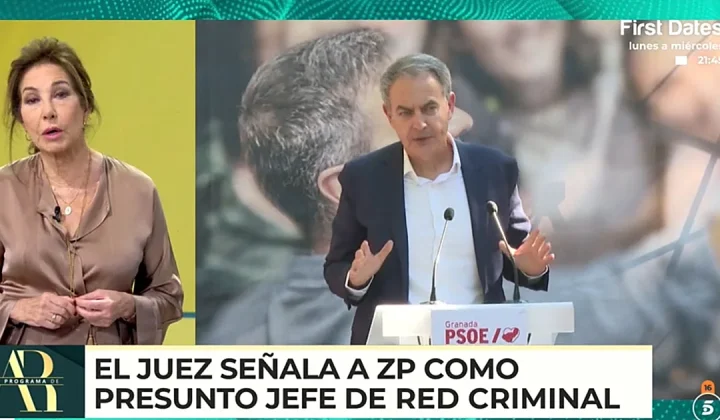
Ana Rosa Quintana Critiques Former President Zapatero Amidst Corruption Allegations
Ana Rosa Quintana has sharply criticized former Spanish President José Luis Rodríguez Zapatero following a judge's imputation in an alleged corruption scheme,…
Leer nota