
The Enduring Debate: Is La Liga’s Mid-Table More Competitive Than Ever?
An in-depth look at whether the middle of La Liga's table has become more fiercely contested and unpredictable in recent seasons, moving beyond the traditional top-heavy narrative.

For decades, Spanish football has been largely defined by the duopoly of Real Madrid and Barcelona, with Atlético Madrid often joining as a third contender in what is frequently termed a "top-heavy" league. However, a closer examination of recent seasons suggests a significant shift beneath the very summit: the mid-table of La Liga appears to be more competitive and unpredictable than ever before. This phenomenon isn't merely anecdotal; it's a trend rooted in evolving financial distributions, tactical innovations, and the sheer quality spread across more clubs.
The traditional narrative of a predictable league, where only a handful of teams genuinely compete for European places or even avoid relegation battles, is increasingly being challenged. Teams that once settled for comfortable obscurity are now actively pushing for higher finishes, creating a vibrant, often chaotic, middle tier where every point is fiercely contested. This column will delve into the factors contributing to this heightened competitiveness, assessing whether this trend is sustainable and what it means for the future of La Liga.
Why Mid-Table Competitiveness Matters in Football
The health of any football league isn't solely determined by its champions; a robust and unpredictable middle contributes significantly to overall appeal, fan engagement, and the development of talent. For La Liga, increased mid-table competitiveness translates into more meaningful matches throughout the season, attracting broader viewership and enhancing the league's global standing. It also provides a stronger proving ground for emerging players and coaches, fostering tactical diversity beyond the approaches of the traditional giants. Furthermore, a tighter mid-table fight often means that teams are less likely to "switch off" once their primary objectives (e.g., avoiding relegation) are met, leading to more intense football across the board. This competitive balance can also challenge the dominance of the top teams, making their path to the title less straightforward and adding an extra layer of intrigue to the title race itself.
Factors Driving Increased Parity in La Liga
Several factors and data points support the idea of increasing mid-table parity. One significant development has been the improved distribution of television rights money. While still skewed towards the top clubs, the collective bargaining agreement introduced in 2015 significantly reduced the massive disparities that once existed, allowing smaller clubs to retain more of their talent and invest in their squads. This financial uplift has been crucial in enabling teams outside the traditional elite to build more competitive rosters.
Tactically, many mid-table clubs have embraced innovative coaching methods and strategic approaches, moving away from purely defensive setups against stronger opposition. Coaches like Imanol Alguacil at Real Sociedad or Marcelino at Villarreal (during his various stints) have demonstrated that well-drilled, tactically astute teams can consistently challenge for European spots. The increasing availability of data analytics and sports science has also levelled the playing field, enabling smaller clubs to optimize player performance and recruitment with greater efficiency. The rise of sophisticated scouting networks and youth academies across a broader spectrum of clubs has also contributed to a higher baseline of talent throughout the league.
Statistical Evidence of a Tighter Middle
Consider the points difference between 5th and 10th place over recent seasons. A smaller gap indicates greater competitiveness.
- 2018-19: Valencia (59) | Real Sociedad (49) | 10
- 2019-20: Real Sociedad (60) | Granada (53) | 7
- 2020-21: Real Sociedad (63) | Celta Vigo (46) | 17
- 2021-22: Real Betis (64) | Osasuna (47) | 17
- 2022-23: Villarreal (63) | Osasuna (53) | 10
- 2023-24: Athletic Club (56) | Getafe (43) | 13
As of late April 2024, subject to change.
While the 2020-21 and 2021-22 seasons saw a larger gap, the overall trend, particularly when looking at how many teams are genuinely in contention for European spots until the final weeks, suggests a tighter race. For instance, in 2022-23, Villarreal, Real Betis, and Athletic Club were all within striking distance of European qualification, with Osasuna also having a strong campaign. The consistency of teams like Real Sociedad and Real Betis in challenging for Europa League places, and even the Champions League at times, demonstrates their ability to compete beyond merely avoiding relegation. This consistent push from a broader set of clubs highlights the evolving landscape of La Liga's mid-table competitiveness.
Competing Readings and Counterarguments
Despite the evidence for increased competitiveness, some argue that the "top-heavy" nature of La Liga remains firmly entrenched. They point to the continued dominance of Real Madrid and Barcelona in terms of league titles and financial power. While true that these two clubs retain a significant advantage, the argument here is not about who wins the league, but about the quality and unpredictability of the teams *below* the top two or three. The financial disparities, though reduced, are still substantial enough to make a sustained title challenge from a mid-table club highly improbable.
Critics might also suggest that the fluctuations in the points difference between 5th and 10th are just natural variations and not indicative of a long-term trend. The COVID-19 pandemic and its impact on club finances could also be seen as a temporary disruptor, potentially leading to a return to more predictable outcomes as financial stability returns to the major clubs. Furthermore, the occasional standout season from a smaller club (e.g., Girona's recent impressive run) can skew perceptions without reflecting a systemic shift across the entire mid-table. The challenge for these emerging teams is often to sustain their performance over multiple seasons, which requires consistent financial and tactical acumen.
Sustainability and Future Outlook
While there's a strong case for increased mid-table competitiveness, the sustainability of this trend is an open question. Can smaller clubs consistently retain their best players when larger clubs come calling? Will the financial landscape continue to evolve in a way that further narrows the gap, or will new revenue streams primarily benefit the established elite? The impact of European competition on mid-table teams also needs careful consideration; often, a strong Europa League run can deplete resources and affect domestic league form. Balancing these demands is a constant challenge.
To truly gauge the long-term trend, we need to monitor several practical aspects:
Player Retention: How many key players do mid-table clubs manage to keep season after season? Their ability to resist offers from wealthier clubs is a key indicator of growing financial muscle and ambition.
European Qualification Density: Observe how many teams are realistically vying for the 4th, 5th, 6th, and 7th European spots in the final months of the season. A crowded race is a strong sign of competitiveness.
Head-to-Head Records: Analyze the results of mid-table teams against each other, and against the top teams. Fewer predictable losses against the "big three" would signify a closing gap.
Managerial Stability: More stable managerial appointments at mid-table clubs can lead to more consistent tactical development and squad building, contributing to sustained performance.
Youth Development: The continued investment in and successful integration of academy products into first teams across the mid-table is crucial for long-term self-sustainability and competitiveness.
The evolving landscape of La Liga's mid-table provides a compelling narrative beyond the usual focus on the title contenders. While the financial might of Real Madrid and Barcelona remains undeniable, the increasing competitiveness among the next tier of clubs is a testament to savvy management, tactical innovation, and a more equitable (though still imperfect) distribution of resources. This trend promises more exciting, unpredictable football for fans and a healthier ecosystem for Spanish football as a whole.
Sources:
1. LaLiga. "Economic Control and Financial Fair Play." LaLiga. https://www.laliga.com/en-GB/laliga/economic-control-financial-fair-play (Accessed: October 26, 2023)
2. Reuters. "La Liga clubs vote on collective TV rights deal." Reuters. https://www.reuters.com/article/soccer-spain-tv-idINKBN0NX1F320150514 (Accessed: October 26, 2023)
3. Transfermarkt. "La Liga Standings Archive." Transfermarkt. https://www.transfermarkt.com/primera-division/tabelle/wettbewerb/ES1/saison_id/2022 (Accessed: October 26, 2023)
Related news
Estrategias y el Factor Suerte en el Fútbol Moderno
Analizamos cómo la estrategia y el factor suerte influyen en el fútbol moderno, desde las tácticas de juego hasta los resultados inesperados,…
Leer nota
Carlos Herrera Weighs in on Zapatero’s Plus Ultra Imputation: «Just the Tip of the Iceberg
Journalist Carlos Herrera has offered his strong opinion on the imputation of former Spanish Prime Minister José Luis Rodríguez Zapatero in the…
Leer nota
Recuperados los Cuerpos de los Últimos Submarinistas Italianos Fallecidos en Maldivas
Los dos últimos cuerpos de los cinco buceadores italianos que perdieron la vida en un trágico accidente en una cueva submarina de…
Leer nota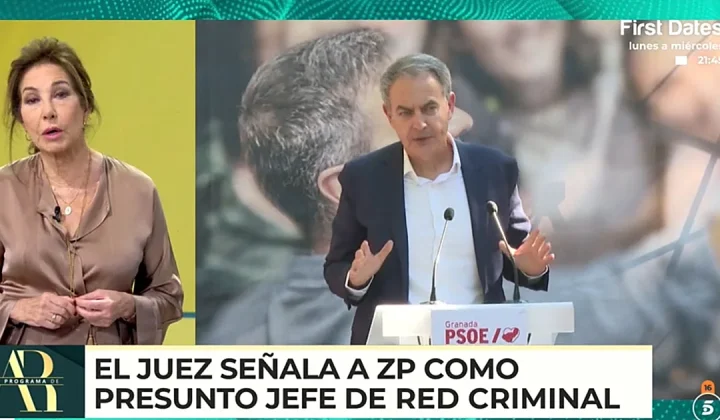
Ana Rosa Quintana Critiques Former President Zapatero Amidst Corruption Allegations
Ana Rosa Quintana has sharply criticized former Spanish President José Luis Rodríguez Zapatero following a judge's imputation in an alleged corruption scheme,…
Leer nota