
How to Spot Misinformation in Your News Feed
Before you share another story, run it through this practical checklist to avoid spreading fake news.
You open your phone and see a headline: “Senator caught hiding documents before vote.” It looks urgent, and the post already has thousands of shares. But a quick look at the URL shows a domain that is one letter off from a major news site. The author’s name is missing. The story mentions a date from last year. In less than a minute, you can suspect it is fake. The real challenge is knowing what to verify next. This guide gives you a fixed set of checks that take less than five minutes and work for any story that feels suspicious.
Start with the source
The first thing to examine is not the article content but the place that published it. Open the domain’s About page and look for a clear editorial mission, contact details, and a corrections policy. Reputable outlets usually disclose who owns them and who leads the newsroom. If that information is hard to find or the domain ends in .co, .info, or a random string of letters, treat the story the same way you would treat an unfamiliar email sender: with caution.
Check whether the article appears on the outlet’s homepage or only in its promoted “sponsored” area. A growing number of fake news pages buy social ads that make a story look viral, but the same site carries no other original reporting. If the outlet has no reporters, no corrections, and no comment section that shows any human response, it is not a source you can trust for breaking news.
Read past the headline
Headlines are written to earn clicks, not to deliver the full truth. A headline might say “Unemployment drops to record low,” while the first paragraph explains that the drop only applies to one state and one month. That is not necessarily fake, but it is misleading when the headline is shared without context.
Scroll down and compare the headline with the first three paragraphs. Ask whether the body actually supports the claim. If the opening paragraph repeats the headline using different words and adds no new information, the article might be a content farm production designed to rank in search results rather than to inform. Look for direct quotes from named people, not anonymous sources or vague phrases such as “experts say.”
Check the author and their evidence
A credible article includes an author who has a public record of past work. Look for the author’s profile on the same site or on a professional network. See whether they cover the same beat or have written on unrelated topics. If there is no author at all, that is a red flag, but even a named author is not enough.
The best test is the evidence trail. Does the article link to a government report, a court document, a press release, or a dataset? Open the links and see if they actually exist. A common misinformation trick is to link to an unrelated source that merely mentions the same topic, giving the false impression of support. If the article only links to other news articles that themselves cite no original material, you are following a chain of unverified claims.
Look for official sources and dates
Misinformation often reappears months after an event, and old news gets recirculated as if it were new. Check the timestamp at the top of the article and the date of the primary source it cites. A story about a storm warning from last season might still be true, but sharing it today can dangerously mislead people who assume it is current.
Search for the same event on governmental websites, academic institutions, or established wire services such as the Associated Press and Reuters. If official sources say nothing, ask why. Sometimes the story is simply too narrow for national coverage, but when it claims to affect millions of people, a total absence from official sources is suspicious. Also note the location. A headline that says “National election results change” but only quotes one county clerk is a clue that the scope is being exaggerated.
Use fact-checking tools and databases
You do not have to do all verification yourself. Independent fact-checkers publish searchable archives of common viral claims. When you see a suspicious statement, copy the exact wording and search for it on a fact-checking site before you share it. The table below shows the main checks you can run in order.
| Red flag | What to do |
|---|---|
| No date or old date | Search for the event on official news networks |
| Anonymous author | Look for a profile or past articles |
| Unusual domain (.co, .info) | Check the About page and known ownership |
| Only one source cited | Find a second independent report |
| Emotional language and CAPS | Look for quotes and data from named people |
Fact-checking databases are useful, but they do not cover every story. If a claim is regional or brand new, you might not find a verdict. In that case, do your own reverse image search on photos in the article. A photo that has been used for multiple different stories is a strong sign that the article is recycled. You can also search the exact headline in quotation marks; if only the same post appears and no reputable outlet has mentioned it, wait before spreading it.
What to do before you share
Decide now, before the next viral post appears, what your personal threshold for sharing is. A good rule is to share only what you can verify from at least two independent sources. Independent means different newsrooms or different primary documents, not the same wire story republished on five websites.
If the article is about an event that affects your local community, look for local government pages or local newspapers. If the article is about a company or a celebrity, check the official account or press release. A single post with a dramatic photo and no named source does not meet the threshold. When you find a real story, share the most authoritative version of it, not the loudest one.
When in doubt, pause
The cost of waiting a few hours is small. The cost of sharing false information can be large, especially when it influences votes, health decisions, or public safety. Before you share the next post, run through the five checks above. If it fails, let it sit in your drafts. Your feed is your responsibility.
Related news
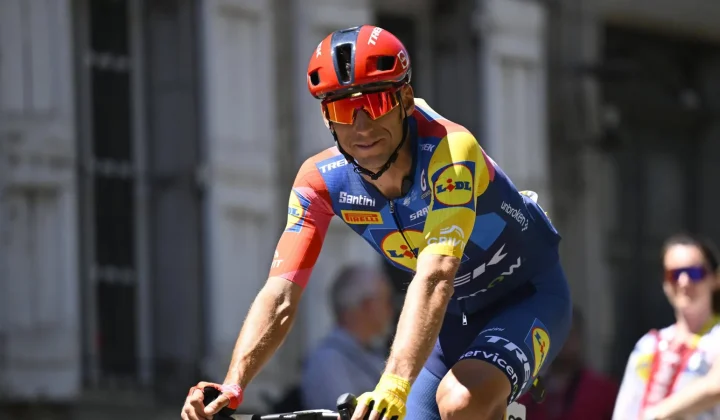
Carlos Verona analiza el Mundial de Ciclismo: “Que no esté Pogacar hace que haya más oportunidades”
El ciclista español Carlos Verona pasó por 'Tiempo de Juego' para analizar el Mundial de Ciclismo en Montreal. Destacó la ausencia de…
Leer nota
El virus FIFA vuelve a amenazar al Barça: riesgo de lesiones y fatiga en un parón de selecciones alargado
El parón internacional de septiembre de 2026 llega con un calendario inusualmente largo para la selección española y viajes intercontinentales para jugadores…
Leer nota
La abstención marca las elecciones en Marruecos mientras el presidente de la Federación de Fútbol se perfila como nuevo jefe de Gobierno
La victoria del Partido de la Autenticidad y la Modernidad, próximo a la Casa Real, asegura la continuidad de la coalición de…
Leer nota
Contenido no publicable: la fuente no guarda relación con el fútbol español
La información de COPE aborda el reparto de cuentas en restaurantes y carece de una conexión verificable con LaLiga, los clubes españoles,…
Leer nota