
Colombia’s Presidential Election Heads to Runoff Amidst Unrest and Recount Doubts
Far-right candidate Abelardo de la Espriella leads, but the left's Iván Cepeda questions the transparency of the vote count, setting the stage for a tense electoral period.
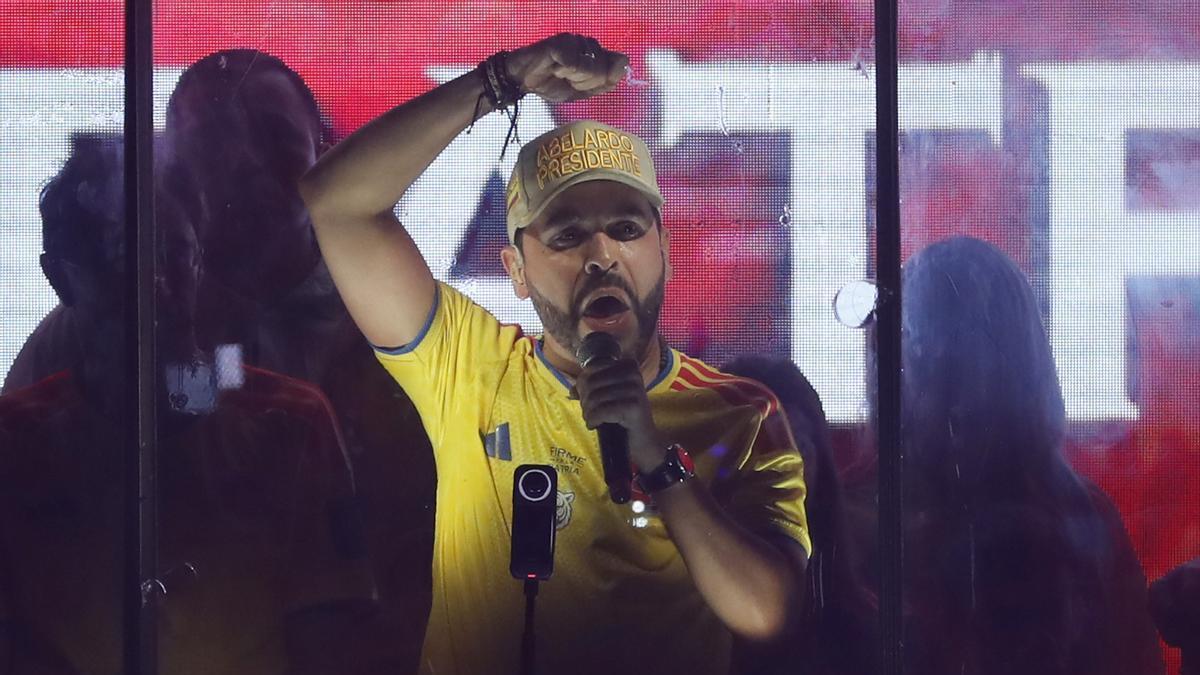
Colombia is bracing for a deeply divided second round of its presidential election on June 21, following a first round that saw far-right candidate Abelardo de la Espriella emerge as the frontrunner. De la Espriella secured 43.7% of the vote, significantly ahead of leftist contender Iván Cepeda, who garnered 40.7%. The close margin and Cepeda’s subsequent questioning of the vote’s transparency have ignited political tensions.
Stalemate and Doubts
Abelardo de la Espriella, a conservative lawyer, is now closer to the presidency after his victory in the initial vote. However, the electoral landscape is clouded by the refusal of Iván Cepeda, the candidate for the Historic Pact coalition, to immediately recognize the provisional results. Cepeda cited concerns over a discrepancy in the electoral census, specifically mentioning an issue with 885,000 voter identification numbers. He emphasized the need for a thorough clarification by the scrutiny commissions before his campaign would issue a definitive statement.
This stance echoes previous challenges by outgoing President Gustavo Petro, who also pointed to alleged irregularities and blamed the company Thomas Greg & Sons for the issues. Such accusations have drawn sharp criticism from De la Espriella’s supporters, including Rafaela Cortés, the governor of Meta, who urged the rejection of unsubstantiated claims and a defense of democracy. De la Espriella himself rallied his supporters, declaring, «We are going to defend democracy by reason or by force.»
The crux of the current dispute appears to have shifted from a technical issue to a political one. The left’s reluctance to accept the numbers, citing a history of institutional malpractices, clashes with the right’s refusal to countenance any potential revisions to the vote count. This situation is particularly concerning for a nation with a history of political violence.
Key Election Dynamics
Beyond the recount controversy, a significant development was De la Espriella’s success in consolidating a substantial portion of the right-wing vote, drawing support from elements previously aligned with Paloma Valencia. The strong «anti-Petro» sentiment within a segment of the electorate, seemingly underestimated by pre-election polls, played a crucial role. What had been a three-way split in preferences prior to the election appears to have solidified into two distinct, almost equal, blocs.
Social media is also seen as having amplified this sentiment. Political commentator Fernando Ruiz noted the prevalence of «useful voting» in recent days, suggesting that Colombians opted for the «safest» candidate rather than taking risks. This trend led to the marginalization of moderate options, with Sergio Fajardo and Claudia López securing only a small fraction of the vote. The headline in the Bogotá newspaper, El Espectador, «Colombia wants an extreme,» captures this sentiment.
A notable statistic from the election is the high abstention rate, with 42% of eligible voters not casting their ballots, underscoring a broader distrust in democratic institutions.
Candidate Profiles and Future Scenarios
Abelardo de la Espriella, who often styles himself as «El Tigre» and refers to his followers as «tigers» and «tigresses» in a manner reminiscent of Argentina’s Javier Milei, has made controversial statements during the campaign regarding gun control, women’s rights, and social justice. Analysts are divided on whether he will moderate his rhetoric and adopt a more statesmanlike approach to govern, or if he will deepen the style that propelled his rise. Some point to his past declarations of atheism and subsequent embrace of evangelical themes to appeal to voters as evidence of his adaptability. For the runoff, De la Espriella will need to secure support from regional power structures to boost turnout, particularly in coastal areas.
Former President Álvaro Uribe, a long-standing adversary of Iván Cepeda, is seen as a key figure in rallying support for De la Espriella, potentially as a personal vendetta against the senator who was instrumental in Uribe’s past legal troubles. Uribe has framed the election as a choice between continuing Petro’s policies, which he calls a «branch of Chavismo,» and the risk of an authoritarian right-wing regime.
The portal La Silla Vacía posed the question of whether the runoff would be a battle between the fear of continuity under Petro’s influence or the fear of an authoritarian right-wing shift, a dilemma facing many Colombians.
Cepeda’s Strategy
Iván Cepeda has extended an olive branch to centrist voters and plans to appeal to Paloma Valencia’s supporters by highlighting perceived dangers to the country. He may attempt to position himself as a defender of institutions, similar to Petro’s successful strategy in 2022 against Rodolfo Hernández. However, this argument may not resonate as strongly this time. Some observers have suggested that Cepeda could offer a comprehensive agreement, but the current atmosphere appears less conducive to demands.
Datos clave
| Aspecto | Detalle |
| :—————- | :———————————————————————– |
| Candidatos | Abelardo de la Espriella (43.7%), Iván Cepeda (40.7%) |
| Fecha Segunda Vuelta | 21 de junio |
| Controversia | Dudas sobre la transparencia del escrutinio por parte de la campaña de Cepeda |
| Abstención | 42% de los votantes elegibles no participaron en la primera vuelta |
The outcome of this election holds significant weight for Colombia’s political trajectory, potentially shaping its economic policies, social reforms, and international relations for years to come. The deep societal divisions and the unresolved questions surrounding the electoral process underscore the challenges that lie ahead for the country, regardless of who ultimately wins the presidency.
Fuente: diariodemallorca.es – https://www.diariodemallorca.es/internacional/2026/06/01/elecciones-colombia-2026-resultados-claves-que-ha-pasado-130879708.html
Datos clave
| Punto | Detalle |
|---|---|
| Fuente | diariodemallorca.es |
| Fecha | 2026-06-01T07:59:02+00:00 |
| Tema | ¿Por qué ha ganado la derecha las elecciones en Colombia? ¿Por qué la izquierda no reconoce los resultados? 5 claves par |
Source
diariodemallorca.es Original publication: 2026-06-01T07:59:02+00:00
Related news

La CONMEBOL Liga Evolución Futsal Zona Norte 2026 arranca con victorias de Brasil y Colombia en Xanxerê
Brasil venció a Colombia en la categoría Sub20, mientras que los colombianos se impusieron en la Mayor. Venezuela sumó una victoria y…
Leer nota
La política española copia estrategias sudamericanas: del beso de Sánchez al «amor» como campaña
El presidente del Gobierno, Pedro Sánchez, ha iniciado la campaña para las elecciones del 29N con un beso a su esposa Begoña…
Leer nota
Carlos Bobillo, el misionero que dejó su carrera por Burundi, protagoniza el DOMUND 2026
El DOMUND cumple cien años en 2026 y la campaña de Obras Misionales Pontificias tiene este año como uno de sus rostros…
Leer nota
El plan del Barça para asaltar el infierno del RAMS Park: así juega el Galatasaray de Okan Buruk
El Barcelona visita este martes al Galatasaray en el RAMS Park, un estadio donde el conjunto turco no pierde desde mayo de…
Leer nota