
The Ballon d’Or: A Legacy of Legends and Enduring Debates
Explore the rich history of the Ballon d'Or, from its inception to the modern era, highlighting its most iconic winners and delving into the ongoing debates surrounding this prestigious football award.
The Ballon d’Or stands as the pinnacle of individual recognition in football, an award that ignites passion and, frequently, controversy each year. Since its inception by France Football, this accolade has immortalized footballers who have defined eras, shattered records, and captured the imaginations of millions. However, its history is not solely composed of names etched in gold but also an unending debate about fairness, criteria, and the very essence of awarding the «best» in a team sport.
The European Genesis of a Coveted Award
The Ballon d’Or’s journey began in 1956, conceived by Gabriel Hanot, the editor of France Football. His vision was to honor the best European footballer. Initially, eligibility was restricted to European players playing for European clubs. This early limitation shaped the award’s first decades, crowning figures who defined mid-20th-century football. The objective was clear: celebrate talent shining in European leagues, laying the groundwork for what would become the sport’s most esteemed individual trophy.
Evolving Criteria: A Global Shift
As football transcended borders, so did the need to adapt the Ballon d’Or’s criteria. In 1995, France Football broadened the award to include any player, regardless of nationality, as long as they played for a European club. This was a significant step, acknowledging the growing impact of non-European talents in elite football. The transformation reached its zenith in 2007 when the criteria opened completely, allowing any footballer worldwide, irrespective of their playing location, to be considered. This full globalization reflected the truly international nature of the modern game.
Early Icons and Historical Dominance
The early years of the Ballon d’Or saw the crowning of true legends. Players like Stanley Matthews, the inaugural winner, along with Alfredo Di Stéfano, Johan Cruyff, Franz Beckenbauer, and Michel Platini, are just a few names that etched their place in history. Each represented a distinct era, style, and philosophy of the game, setting standards of excellence that inspired subsequent generations. These early recipients demonstrated not only exceptional talent but also a consistency and leadership that set them apart in their respective times.
The Messi-Ronaldo Era: An Unprecedented Rivalry
The 21st century has been intrinsically linked to the rivalry between Lionel Messi and Cristiano Ronaldo. Since 2008, these two footballers have largely monopolized the Ballon d’Or, creating an unprecedented sporting phenomenon. Their dominance has elevated the debate to new heights, dividing fans and experts on who truly deserves to be considered the best. Their individual records, collective achievements, and longevity at the elite level have redefined what is considered possible in football, making them synonymous with success and ambition.
Key Winners Across Decades
Here’s a look at some notable Ballon d’Or winners throughout history, showcasing the evolution of the game and its stars:
| Year | Player | Country | Club |
|---|---|---|---|
| 1956 | Stanley Matthews | England | Blackpool |
| 1970 | Gerd Müller | West Germany | Bayern Munich |
| 1986 | Igor Belanov | Soviet Union | Dynamo Kyiv |
| 1998 | Zinedine Zidane | France | Juventus |
| 2006 | Fabio Cannavaro | Italy | Juventus / Real Madrid |
| 2010 | Lionel Messi | Argentina | FC Barcelona |
| 2013 | Cristiano Ronaldo | Portugal | Real Madrid |
| 2018 | Luka Modrić | Croatia | Real Madrid |
| 2022 | Karim Benzema | France | Real Madrid |
The Eternal Debate: Individual Brilliance vs. Team Success
The Ballon d’Or’s inherent nature lies in its ability to spark discussion. Should it reward the player with the purest talent, the one who makes the difference in critical moments, the undisputed team leader, or a combination of these factors? The subjectivity in voting allows different criteria to hold more weight for various electors. Elements such as performance in international tournaments, season-long consistency, and overall influence on the game are frequent points of contention. This duality between individual appreciation and the recognition of collective success is what keeps interest and controversy alive year after year.
Looking Ahead: New Stars and Future Challenges
The football landscape is in constant flux, and so is the future of the Ballon d’Or contenders. Emerging talents like Kylian Mbappé, Erling Haaland, and Vinícius Júnior, along with a new wave of stars, are poised to write their own chapters. For France Football, the challenge will be to maintain the credibility and relevance of an award that, despite its controversies, remains the ultimate individual accolade. The debate over who deserves the Ballon d’Or will undoubtedly continue, fueling the passion for football and reminding us of the greatness of the athletes who define it.
Related news
La acampada de Sol y el problema de la vivienda en España: ¿Qué impacto tiene en el fútbol?
La protesta en Sol por el desahucio de Maricarmen y la crisis de vivienda se cruza con la realidad de los clubes…
Leer nota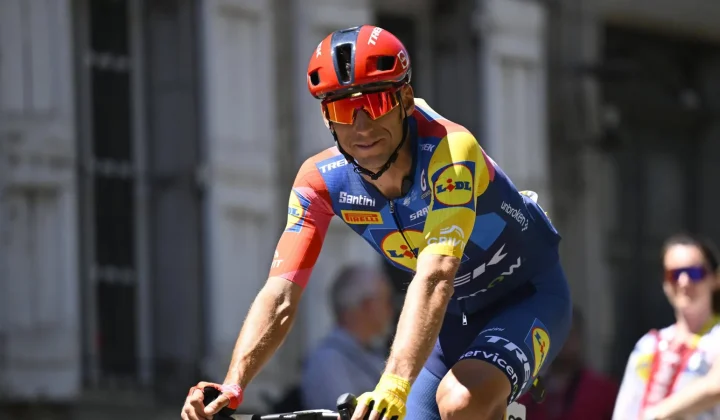
Carlos Verona analiza el Mundial de Ciclismo: “Que no esté Pogacar hace que haya más oportunidades”
El ciclista español Carlos Verona pasó por 'Tiempo de Juego' para analizar el Mundial de Ciclismo en Montreal. Destacó la ausencia de…
Leer nota
El virus FIFA vuelve a amenazar al Barça: riesgo de lesiones y fatiga en un parón de selecciones alargado
El parón internacional de septiembre de 2026 llega con un calendario inusualmente largo para la selección española y viajes intercontinentales para jugadores…
Leer nota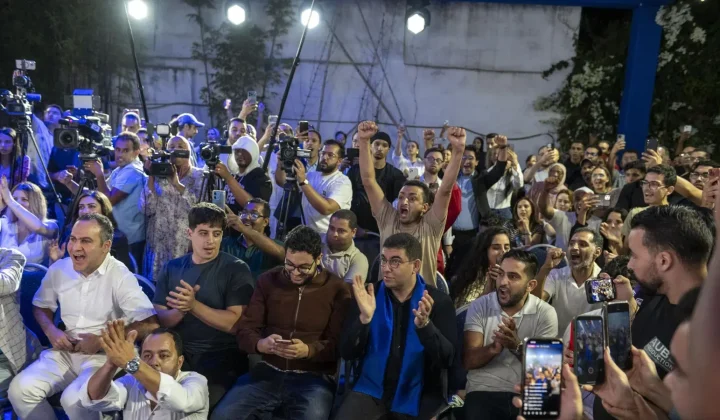
La abstención marca las elecciones en Marruecos mientras el presidente de la Federación de Fútbol se perfila como nuevo jefe de Gobierno
La victoria del Partido de la Autenticidad y la Modernidad, próximo a la Casa Real, asegura la continuidad de la coalición de…
Leer nota